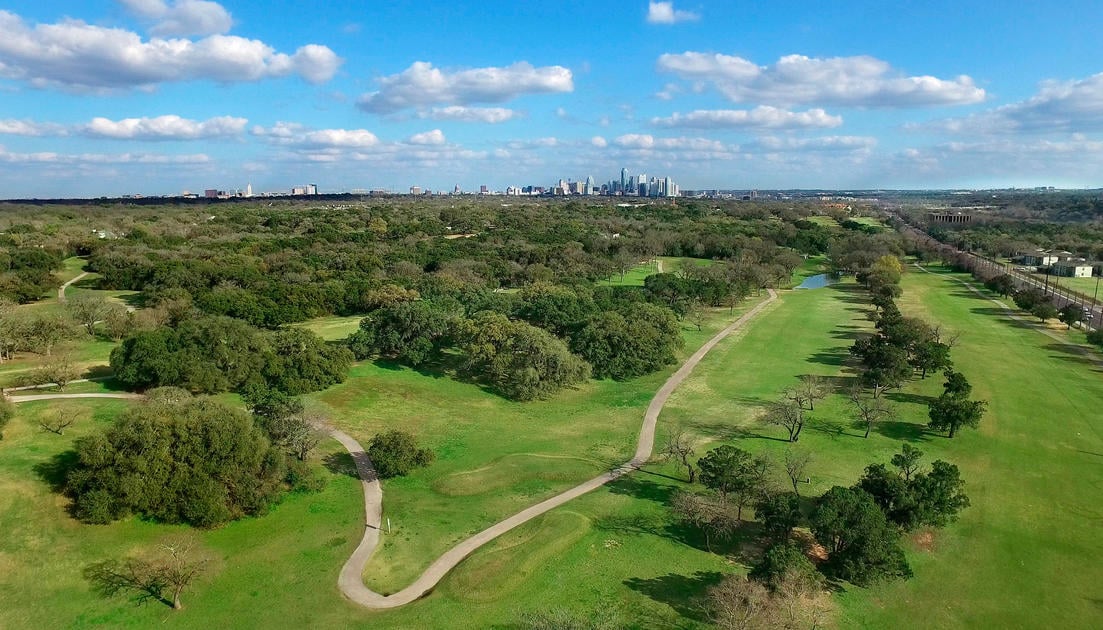
On October 14, the City of Austin announced it is close to an agreement with the University of Texas that would give the City ownership of Lions Municipal Golf Course. Muny opened in 1924, and the City has run it under one lease or another since 1937. City Council takes up the agreement on November 19.
The City is giving up no cash for the course. It is trading rules. The ownership transfer sits inside a set of amendments to the 1989 Brackenridge Development Agreement, which governs how UT may develop the land it owns on both sides of Lake Austin Boulevard. At an October 21 briefing, City attorney Trish Link described the deal to the Environmental Commission as Austin exchanging what it had rather than paying a price it could not afford, Austin Current reported. What the City had to trade was control over the stretch of Tarrytown's southern edge where most people do their errands.
What Changes Hands, and What Stays With UT
Muny itself is the headline. The draft terms posted for the Environmental Commission and local reporting list several more pieces:
- Muny goes to the City. The course at 2901 Enfield Road would become City property.
- The WAYA campus goes to the West Austin Youth Association, according to Community Impact.
- Some City rights-of-way go to UT if vacating them is reasonably feasible and public safety holds up, with UT paying to relocate utilities.
- Existing affordable student housing gets replaced somewhere on University property, though not necessarily within the Brackenridge area.
- UT's lease at Mueller gets amended to adjust timelines and add residential uses and childcare, among other things. That's relevant to anyone following Mueller as well.
UT keeps roughly 190 acres. That land is familiar ground. Axios Austin identified what already stands on it: the H-E-B, CVS, a 7-Eleven, apartments, the LCRA headquarters, graduate housing, and the Oyster Landing businesses, including Mozart's and Hula Hut. Community Impact reported that the Brackenridge Apartments on Lake Austin Boulevard would stay for the near term and could be relocated and rebuilt once redevelopment begins.
UT has not announced a development plan, Community Impact reported. The proposed use schedules cover a wide range: residential, retail, office, restaurant, hotel, research, civic, and more. The rules attached to that land carry more weight than any single project.
The Draft Rules, Line by Line
These standards apply to non-University projects across the whole 190.26-acre area. They come from the terms document presented on October 21.
Standard | Draft term |
|---|---|
Overall floor-area ratio | 0.6:1 across the entire area |
Single-site ceiling | No site above 5:1 FAR without a Council-authorized rezoning |
Height, on or north of Lake Austin Blvd | Up to 65 feet, with compatibility requirements north of the boulevard |
Height, south of the boulevard and not fronting it | Up to 105 feet, but never taller than 65 feet measured from Lake Austin Blvd |
Impervious cover | 75% overall; up to 85% on a single site, transferable between sites |
Building coverage | Up to 75% per site |
Lake setback | 200 feet from Lady Bird Lake |
Height and density are the two lines that need a closer read.
On height, the City's public summary puts the cap at 65 feet "when viewed from Lake Austin Boulevard." The technical draft says the same thing more precisely. No building can rise more than 65 feet measured from the boulevard, while buildings south of it that don't front the road can reach 105 feet. The draft also allows the City's standard height-limit exception, listed there as Section 25-2-531. The lake side is where the taller numbers are possible. The Tarrytown side, north of the boulevard, keeps compatibility requirements.
Density works differently than the headline ratio suggests. The 0.6:1 FAR applies to the full 190 acres. Setbacks from the river, a tributary, and Lake Austin Boulevard take developable land out of that total. The draft also says sites developed later may find little or no FAR left and that the City is not responsible for resolving those disputes. The draft also drops the existing 22-unit-per-acre cap on multifamily housing.
On the environmental side, the draft keeps the 200-foot lake setback, made up of a 150-foot primary zone and a 50-foot secondary zone. It adds a minor-waterway setback under current code, adopts City water-quality and drainage requirements, and calls for heritage-tree provisions plus later review of critical environmental features south of the boulevard.
Who Pays for the Pipes
Most of the land is undeveloped, so building on it needs new sidewalks, water and wastewater lines, drainage, and street layouts. The deal proposes a Tax Increment Reinvestment Zone to pay for that infrastructure. City and UT representatives would work out the needs, cost estimates, and reimbursement timing later, according to the staff presentation. The terms also create a local government corporation. The TIRZ would have to follow the City's affordable-housing policy, but the affordable housing would not have to be inside the TIRZ area.
For scale, Community Impact reported that the Muny and WAYA land together was appraised at more than $680 million, while the City pays UT just under $500,000 a year to lease the golf course. Neither figure is a purchase price. The same report says anonymous donors proposed a "very large" gift to UT to help the arrangement along, with no amount disclosed. Mayor Kirk Watson called the preservation a deal at no cost to taxpayers. The TIRZ estimates that would test that claim haven't been written yet.
The Questions Raised So Far
Most of the scrutiny so far has landed on the south side of the boulevard. In public comments filed with the Environmental Commission, scientists from UT's Brackenridge Field Laboratory and environmental advocates pointed out that the draft map labels the area south of Lake Austin Boulevard a "Development Area." They said nothing in the proposal explicitly protects the field lab or its habitat. Those comments put the lab at 81 or 82 acres. One commenter asked the Commission to exclude it from development, finish environmental review before Council acts, and protect the lab if its acreage counts toward the impervious-cover average. That last request ties back to the table above. Cover can move between sites, so undeveloped acreage in the average can make room for more pavement somewhere else.
At the same meeting, Austin Current reported that commission chair Mariana Krueger asked why the City was moving so quickly and that commissioner Haris Qureshi questioned the deal's urgency and financial balance. A West Austin Neighborhood Group board member said residents welcomed the chance to save Muny but wanted more information on traffic and environmental impacts.
Muny's longtime advocates support the deal. Save Historic Muny District chair Ken Tiemann and the district endorsed the agreement and urged Council and the UT Regents to approve it, according to Community Impact. Muny Conservancy co-chair Ben Crenshaw welcomed a path to keeping all 18 holes and urged supporters to keep pushing until the deal is done. UT said it is working with the City while honoring its fiduciary and stewardship obligations, the Austin American-Statesman reported.
Two Votes, Five Months Apart
The deal moves on a split schedule, and the split shows where the open questions sit.
- October 27. The Planning Commission was scheduled for its own staff briefing on the amendments.
- November 19. City Council considers the amended agreement.
- Spring 2027. If Council approves, staff draft the regulating plan and the TIRZ over the winter. Both then go back through Boards and Commissions and return to Council.
The November vote takes up the Muny transfer and the framework. The regulating plan, which turns those draft standards into the rules projects actually follow, comes next spring along with the TIRZ details. For Tarrytown, the first vote is about the golf course, and the second will decide much of what Lake Austin Boulevard will look like.
Nothing about a round of golf changes in the meantime. The City has run Muny on a month-to-month lease from UT since 2019, and the transfer still needs approvals and a formal conveyance. Tee times are still booked online through GolfATX's Lions Municipal page, under the same weekday and weekend reservation rules. The full City summary and the November agenda are posted on the Brackenridge Tract page.
For more on how Tarrytown's few commercial sites keep changing hands, see our look at Casis Village's ownership turnover or our Tarrytown neighborhood page.
If you own in Tarrytown or elsewhere in Central West Austin and want to talk through what the Brackenridge decisions could mean for your street, Levack Living will keep following the regulating plan through spring. Schedule a personal market consultation and we can go over it together.