Thinking about remodeling in Hyde Park? That can be exciting, but it can also get complicated fast if you assume every older home in the neighborhood follows the same rules. In Hyde Park, the smartest remodel plans usually start with one question: what does your specific property status allow? This guide will help you understand Hyde Park’s historic framework, the remodeling options that are often most practical, and the due diligence steps that can save you time before you finalize plans. Let’s dive in.
Why Hyde Park remodeling is unique
Hyde Park is not just an older Austin neighborhood. It is a locally designated historic district that covers about 186 acres and roughly 640 properties, with about 480 contributing properties and a period of significance from 1892 to 1960, according to the City of Austin’s historic districts page.
That local designation matters because it adds a historic district overlay to the base zoning. In practice, that means exterior changes may be reviewed under Hyde Park’s preservation plan and design standards, which the city says govern if they conflict with the Secretary of the Interior’s Standards. Before you make assumptions, the city recommends checking the Historic Property Viewer to confirm whether a property is a landmark, in a local historic district, or in a National Register district.
Another important detail is that Hyde Park’s design standards do not apply to noncontributing structures. That is one reason address-specific verification matters so much. Two homes on the same block may face different review paths depending on their status.
Local historic district vs National Register
This is one of the biggest points of confusion for buyers and owners. Austin distinguishes between local historic districts and National Register districts, and the difference affects remodeling.
A local historic district comes with zoning protections and design review for qualifying work. A National Register district is largely honorific, with no zoning change and only advisory historic review, as explained in the Hyde Park design standards.
If you are buying a home with future renovation plans in mind, this distinction can shape your budget, timeline, and design flexibility. It is one of the first things worth confirming before you decide how ambitious your project should be.
What Hyde Park standards try to preserve
Hyde Park’s rules do not ban change. They are designed to guide change in a way that respects the neighborhood’s historic patterns.
According to the district design standards, many homes in Hyde Park share a few common features:
- Street-facing front doors and windows
- Prominent front porches
- Hipped, gabled, or combined hipped-and-gabled roofs
- Historic dormers and established roof profiles
- Rear or side placement for garages and parking
The standards also emphasize matching exterior materials when repairs or replacements are needed. That does not mean every home must look frozen in time, but it does mean the public-facing architectural character tends to carry the most weight.
Remodeling options that are often most realistic
If you want to improve function while reducing review friction, some project types are generally more straightforward than others.
Interior remodels usually offer the most flexibility
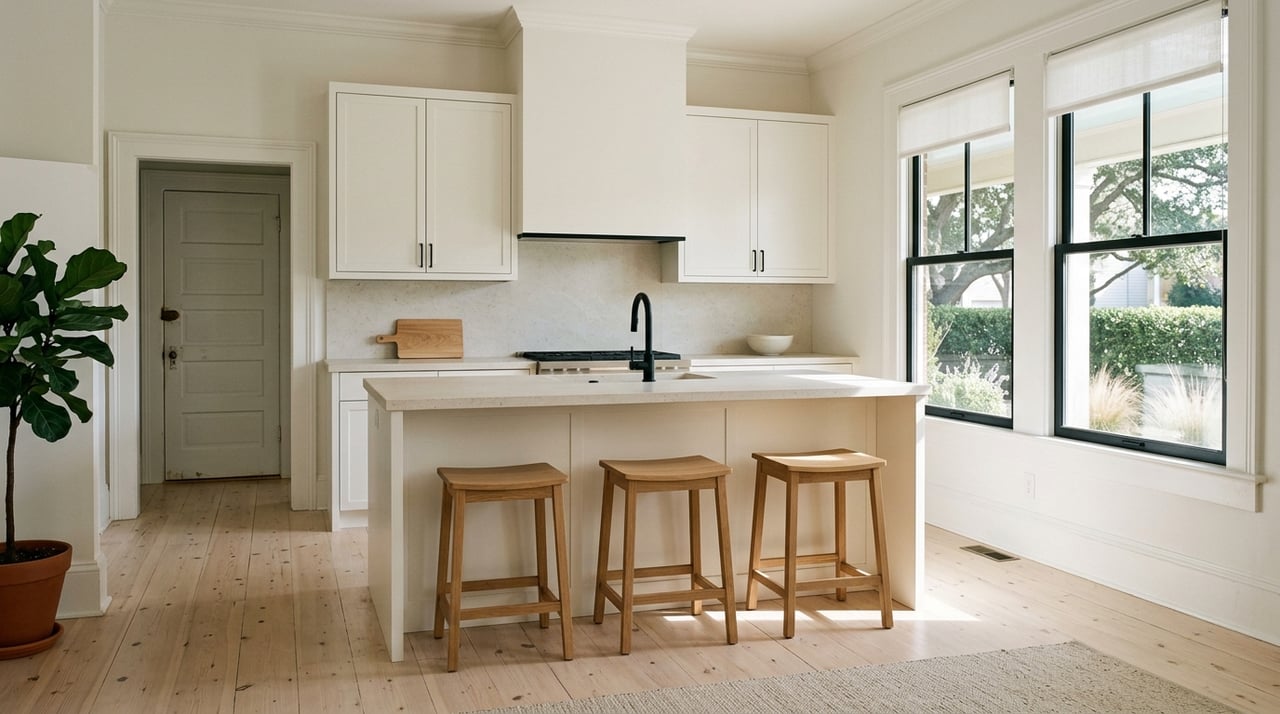
For many Hyde Park owners, interior updates are the clearest path to modernizing a home. The district standards state that interior remodels are not reviewed under Hyde Park’s design standards, paint color is excluded, and owners are not required to restore a building to a historic appearance.
That makes projects like these especially practical:
- Kitchen remodels
- Bathroom renovations
- Interior reconfiguration
- Storage improvements
- Layout updates that happen within the existing shell
If your goal is better daily function rather than a major exterior transformation, interior work is often the least constrained value-add path.
Exterior repairs favor restoration over replacement
For exterior work, Hyde Park generally favors a repair-first approach. The design standards say original windows and doors should be repaired or rehabilitated where possible.
The city also points to compatible energy improvements such as:
- Weatherstripping
- Insulation upgrades
- Clear interior film on windows
By contrast, the standards say tinted film on original windows is not the preferred approach. Open front and street-side ground-floor porches should also be preserved rather than enclosed.
Rear additions are usually the best fit
If you need more square footage, rear or rear-side additions are usually the most realistic path. The standards say additions should minimize loss of historic fabric, avoid removing the front façade, and remain subordinate to the original structure.
The Hyde Park standards specifically recommend options such as:
- Extending the rear roofline
- Using attic space
- Adding dormers that do not exceed the original ridge where possible
For second-story additions, the standards say they should be set back at least 15 feet from the front wall. That setback helps keep the original street-facing form more visually legible.
New construction and accessory options
If you are planning a larger redevelopment, Hyde Park still allows room for new construction, but compatibility matters. The standards say new homes can be contemporary as long as they fit neighborhood patterns in scale, roof form, entrance placement, and materials.
Some of the specific expectations include:
- Front entrances should be on the front of the house
- New garages should be detached and rear-located
- Front porches are optional, but if included, they must be at least 7 feet deep
- Solar and rainwater collection features are encouraged if handled unobtrusively and in scale with the roofline
Garage apartments or secondary units may also be possible, but the Hyde Park NCCD allows them only on lots of at least 7,000 square feet, according to the district standards. That makes lot size another key part of pre-purchase or pre-design due diligence.
Site rules still matter
Historic review is only part of the picture in Hyde Park. The neighborhood also has rules tied to the Hyde Park NCCD, which regulate site-development items such as setbacks, height, coverage, impervious cover, façades, driveways, fences, and accessory buildings.
That means a remodel can be historically compatible and still run into separate zoning or site-development constraints. If you are evaluating a property for a future addition, new accessory structure, or parking change, it helps to think about the approval stack early rather than treating historic review as the only hurdle.
When historic review is required
Austin requires a historic review application for exterior alterations, additions, permanent site work, signs, and stand-alone new construction on a historic landmark or a contributing property in a historic district or National Register district, according to the city’s Historic Preservation page.
In historic districts, a Certificate of Appropriateness, or COA, must be granted before building, demolition, or relocation permits are issued. The city encourages applicants to use Austin Build + Connect and confirm property status first.
There is another layer many owners miss. Austin’s residential plan review guidance says historic review can also be triggered for structures 45 years old or older when the exterior is being demolished or modified. Depending on project scope, you may also need zoning review or other standard reviews.
What the review process can look like
Not every project follows the same path. The COA application materials explain that owners can request optional preliminary feedback from the Certificate of Appropriateness Committee before a full Historic Landmark Commission review.
The COA application packet also notes that:
- The Historic Landmark Commission generally meets monthly
- Minor projects may be approved administratively by the Historic Preservation Office
- Larger proposals may go to the Commission
- Demolition permits for primary structures are not released until a replacement structure receives COA approval
This is one reason timing matters. If you are buying a Hyde Park property because you see renovation upside, you will want to understand not just the design rules, but also the approval path and likely review timeline.
A practical remodeling strategy for Hyde Park
For most owners, the best remodeling strategy is not to fight the neighborhood’s logic. It is to work with it.
In Hyde Park, the most compatible projects are often the ones that preserve the street-facing façade, porch, and roofline while improving the home’s livability behind the scenes. That can mean reworking the interior, repairing original elements where possible, or placing additions at the rear so the historic public face of the home remains clear.
If you are shopping for a home in Hyde Park, this framework can also help you separate realistic opportunities from expensive assumptions. A house may have strong potential, but the right plan depends on contributing status, lot size, NCCD limits, and the type of exterior changes you want to make.
If you want help evaluating a Hyde Park home from both a lifestyle and long-term value perspective, Erika Levack can help you think through property fit, neighborhood context, and the questions worth asking before you buy or remodel.
FAQs
What historic rules apply to a Hyde Park home in Austin?
- The answer depends on the property’s status. Hyde Park is a locally designated historic district, but the city recommends verifying whether a specific parcel is a landmark, a contributing property, in a local historic district, or in a National Register district before planning exterior work.
Can you remodel the inside of a Hyde Park historic home?
- Yes. Hyde Park’s design standards state that interior remodels are not reviewed under the district standards, which often makes kitchens, baths, and interior layout changes the most flexible upgrade options.
Do all Hyde Park houses follow the same remodeling standards?
- No. The Hyde Park design standards expressly do not apply to noncontributing structures, so rules can vary from one address to another.
Are additions allowed on Hyde Park homes?
- Yes, but the standards generally favor additions at the rear or rear side of the house. They should remain subordinate to the original structure, and second-story additions should be set back at least 15 feet from the front wall.
Can you replace windows on a Hyde Park home?
- The standards favor repairing or rehabilitating original windows where possible. Compatible energy improvements like weatherstripping, insulation, and clear interior film are preferred approaches.
Do you need a Certificate of Appropriateness in Hyde Park?
- For qualifying exterior work on historic landmarks or contributing properties in historic districts or National Register districts, yes. In local historic districts, a Certificate of Appropriateness must be granted before certain permits are issued.
Are garage apartments allowed in Hyde Park?
- They may be allowed, but the Hyde Park NCCD says garage apartments or secondary units are permitted only on lots of at least 7,000 square feet.
What should you check before buying a fixer in Hyde Park?
- Start with the property’s historic designation status, contributing or noncontributing status, lot size, and the Hyde Park NCCD site-development rules. Those details can affect what kind of remodel, addition, or accessory structure may be feasible.